
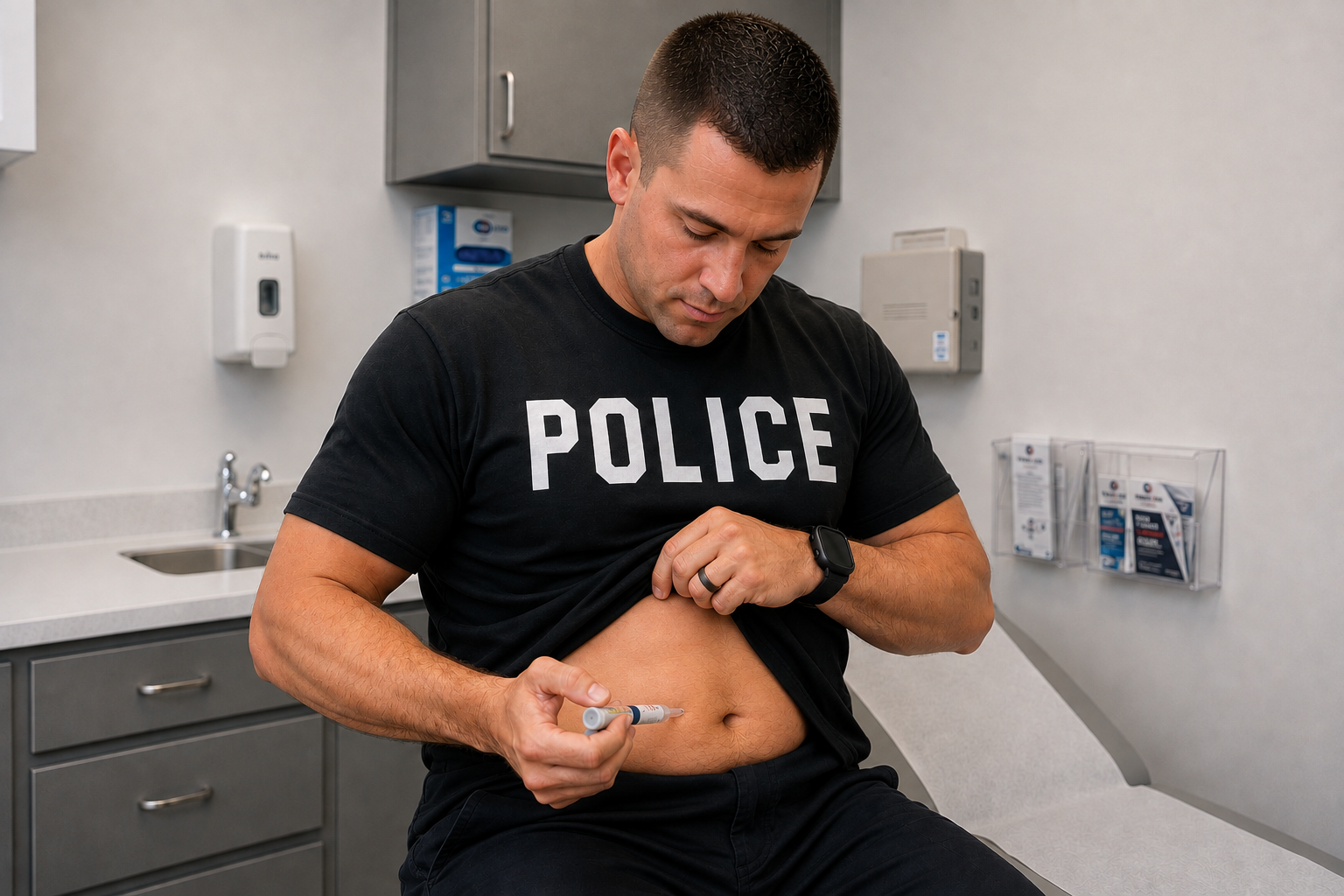
If your job requires you to drag a hose line, carry a downed victim, scale a fence, or wrestle a combative subject, your muscle isn’t cosmetic. It’s your equipment. So when firefighters and officers ask about starting a GLP-1 agonist such as semaglutide or tirzepatide, the topic that clients most often bring up is some version of: “I’ve heard people lose a lot of muscle on those medicines, is that true?”
It’s a fair question, and it deserves a straight answer.
The Honest Answer: Some Muscle Loss Is Normal — With Any Weight Loss Method
Here’s what the research actually shows. When people lose weight on a GLP-1 agonist, roughly 25–39% of the total weight lost is lean body mass, and about half of that is skeletal muscle. A large pooled analysis of 20 studies put the number at 26.5% — and that figure held up consistently whether people were on semaglutide, tirzepatide, or doing it through diet and exercise alone.
That last part is the piece most people miss: this isn’t unique to GLP-1s. Bariatric surgery, aggressive dieting, any method that produces significant fat loss comes with some proportional muscle loss too. In the SURMOUNT-1 trial, the proportion of weight lost as lean mass on tirzepatide was nearly identical to the placebo group doing diet and exercise alone — the difference is that GLP-1 users typically lose more total weight, so the raw number of pounds of muscle lost looks bigger, even though the percentage is about the same.
There’s also good news buried in the data: while you may lose some absolute muscle mass, your body fat percentage tends to improve, because you have proportionally more muscle. Even better, muscle quality actually gets better on these medications. Your body composition, on the whole, moves in the right direction.
In practice I regularly see clients lose significant weight using a comprehensive plan that includes GLP-1 agonists, and while some muscle loss is normal with significant weight loss, many people lose little to no muscle. Let’s discuss why I’m not seeing an issue with muscle loss on these medications, and what factors are associated with higher than desired muscle loss.
Can Anything Be Done to Prevent Muscle Loss?
Muscle loss on a GLP-1 isn’t inevitable. It’s largely preventable, and the two levers that matter most are ones you already have control over.
1. Resistance Training
This is the single biggest factor, according to evidence. It’s your offensive approach to maintaining (or building) muscle. Structured strength training — not just cardio, not just staying active on shift — can cut lean mass loss during weight loss by 50 to 95%. Research indicates strength training at least 2–3 times per week is enough to reduce muscle loss. Aerobic work alone doesn’t protect muscle nearly as well as resistance training does, though cardio is still important for overall fitness and health. If your current routine is mostly cardio, this is the moment to add weight room time back into the schedule, not cut it.
2. Protein Intake
This is your defense against muscle loss. Protein is the building block for muscle, and without adequate protein intake while in a calorie deficit, our bodies will break down muscle. Many of us underconsume protein without realizing it, and that only becomes more of an issue when taking these medications.
Because GLP-1s suppress appetite, hitting that number takes some intention. A few practical adjustments that make a real difference:
- Eat the protein on your plate first, before the vegetables or carbs.
- Lean on nutrient-dense, low-volume sources when your appetite is low — lean meats, Greek yogurt, eggs, cottage cheese, fish, nut butters.
- Keep a protein shake or bar on hand for busy days.
The combination of adequate protein and strength training is key in optimizing muscle mass while losing weight.
What We Do to Combat Muscle Loss and Keep You Functional
Part of what a structured program like Peak Performance offers is the ability to actually track this instead of guessing. That includes:
- Body composition checks to see the fat-versus-muscle breakdown of what you’re losing, not just the number on the scale.
- Watching the rate of loss. Losing more than about 5% of body weight in a month is a signal to slow down or adjust the plan, not push harder.
- Tailored, expert guidance on nutritional targets and exercise, not gimmicks and one-size-fits-all approach from a random influencer.
- Strategies to consistently implement these changes in a manageable way, so you can be successful long term.
The Bottom Line
GLP-1 agonists are not for everyone, but they are a safe and effective option to treat overweight or obesity for some. The data is clear that muscle loss happens in proportion to any significant weight loss — it’s not a unique downside of these medications. And you have the power to impact your results significantly, and we work with our clients to ensure they have a comprehensive plan to optimize their health and fitness while losing weight.
Starting a GLP-1 agonist is a big decision, and there are many factors to be considered. We know there is a lot of misinformation out there, and want to be a source of solid, evidence-based guidance. If you found this helpful, let us know!