
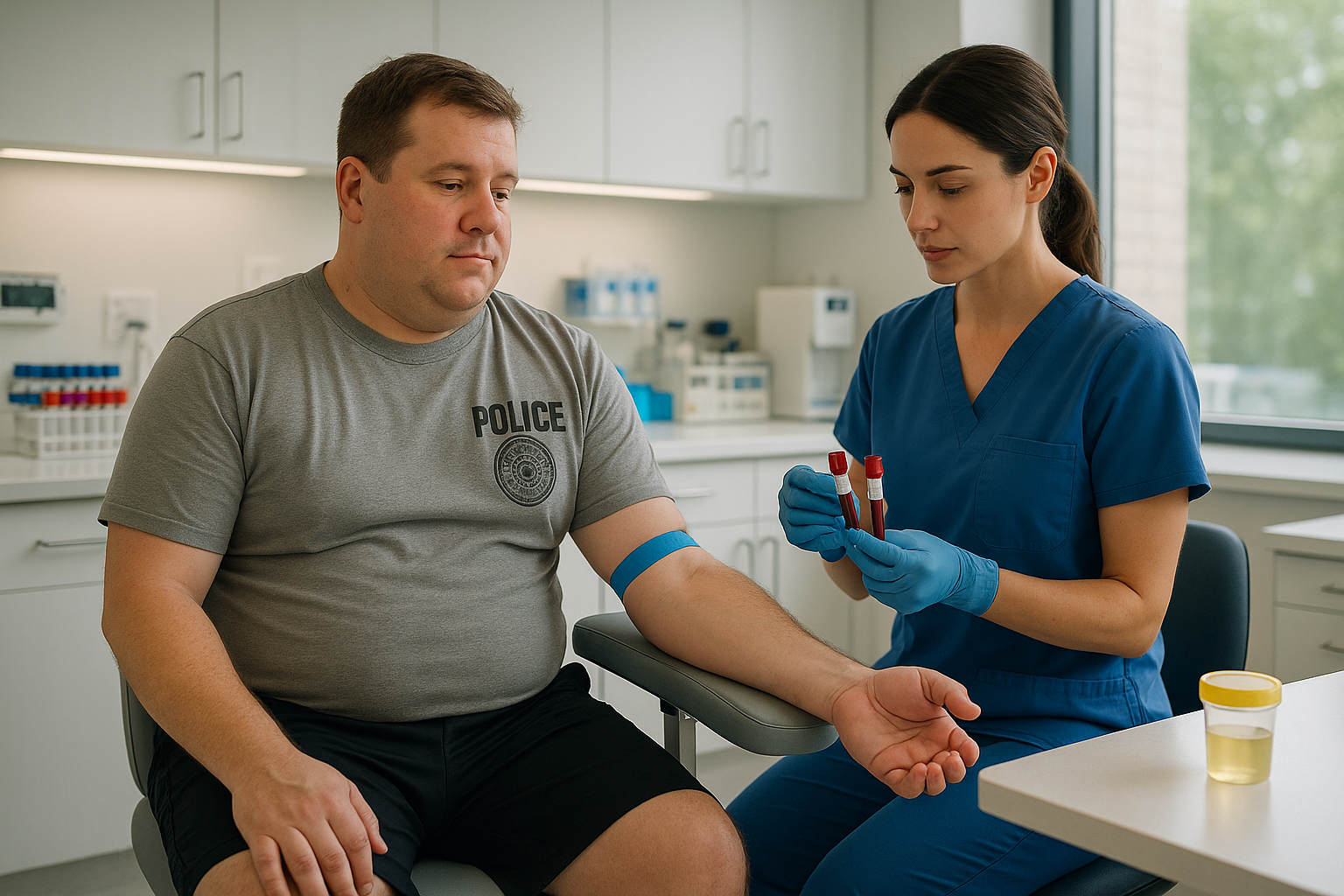
 Joe is a first responder who goes to see his primary care provider for his annual checkup. His blood pressure is borderline high. His cholesterol is elevated and getting worse. His blood glucose is inching closer to diabetes. Over the past few years, he has gained weight.
His provider gives him familiar advice: cut back on sugar and exercise more regularly.
Joe agrees, but his reality looks different. He works shifts and struggles to get consistent sleep. When he is off duty, he is busy with his family and a second job. Money is a constant stressor because one of his children has special needs and requires expensive care. He is exhausted. He wants to do better, but he cannot seem to stick with any diet or exercise plan for more than a few weeks.
He is tired of hearing that he needs to lose weight. He already knows that.
What he does not know is how to find the motivation to make it happen, or if it is even possible for him.
This is a common story, especially among firefighters and law enforcement officers. The need for weight loss is identified, but the contributing factors are often ignored or never assessed. For tactical athletes, this gap is significant.
There is a clear and well-established two-way relationship between obesity and mental health. Obesity increases the risk of depression, anxiety, and other psychiatric conditions, while those same mental health challenges can contribute to weight gain and make weight loss more difficult. Weight loss interventions have been shown to improve mental health outcomes, particularly depression and overall quality of life (Steptoe & Frank, Apovian et. Al; Dong et. Al; Silverii, et. al).
In other words, weight and mental health are not separate issues. They influence each other in meaningful ways.
Simply pointing out that someone could benefit from losing weight, or even providing a plan, is often ineffective if mental and behavioral health are not part of the conversation. There are biological reasons for this connection. Both obesity and neuropsychiatric disorders are associated with low-grade systemic inflammation, including inflammation that affects the brain (Martins et. Al, 2019).
When the brain and body are both under strain, change becomes harder to sustain.
The evidence supports screening for mental health conditions in individuals with obesity to improve outcomes and guide appropriate treatment (Leutner). Mental health is a critical, yet often overlooked, component of effective weight management. Long-term success is more likely when treatment includes psychological support and is tailored to the individual (Osborne & Abdelgadir, 2026).
Looking at the relationship from the other direction, improving physical health can also improve mental health. Lifestyle changes, nutrition, exercise, and even surgical interventions have all been shown to reduce symptoms of depression. Lifestyle modification, in parti cular, has been effective in non-surgical settings (Garvey et. al, 2016).
The Look AHEAD study showed that an average 8% weight loss reduced depressive symptoms in more than 5,000 adults (Garvey). The Women’s Healthy Lifestyle Project demonstrated significant improvement in depression scores with an average weight loss of 11 pounds over six months (Garvey).
Even modest, sustainable weight loss can lead to meaningful improvements in how people feel, not just how they perform physically.
This matters for first responder populations. Rates of overweight and obesity are higher than in the general public.
Firefighters: 78–80% are overweight or obese, with 33–44% classified as obese (Beckett et. al, 2023; Poston et. al, 2011).
Police officers: 79.3% are overweight or obese, with 33.5% classified as obese (Rajaratnam et. al, 2011).
These professionals also face unique and persistent stressors, including disrupted sleep, repeated exposure to trauma, and high job demands. Many are at increased risk for depression, anxiety, PTSD, and sleep disorders.
In practice, we see that weight struggles in these populations are often closely tied to mental health challenges. Evidence underscores the need for integrated physical and mental health approaches in first responder wellness programs, with particular attention to screening for mental health disorders in those with obesity (Wohlgemuth). Programs that combine structured physical activity, education, and behavioral health support produce the most consistent results. This is especially true when peer support is included (MacMillan, et. al, 2020).
This is not about telling people to try harder. It is about giving them the right tools and support.
Returning to Joe, imagine a different approach. Instead of focusing only on weight, his provider evaluates both his physical and behavioral health. His plan accounts for shift work, sleep disruption, his own personal stressors, and family responsibilities. He receives guidance that fits his life, not just general recommendations.
With the right support in place, Joe is no longer relying on willpower alone. He has a strategy that addresses the real barriers in front of him.
For leaders in fire and law enforcement, this is an important shift in perspective. If your people are struggling with weight, the issue is not simply diet or exercise. It includes stress, sleep, mental health, environment, and support systems. When these factors are addressed together, outcomes improve. When they are ignored, even highly motivated individuals will continue to struggle.
Weight loss is not simply a matter of eating less and moving more. It is influenced by the conditions people are working and living in every day, and can be both positively or negatively impacted by behaviors and mental factors. Health is more than the physical aspects. We get that, and we offer solutions for your department and team. Visit https://frontlinepeakperformance.com/ to learn more.
References
Apovian, C. M., Aronne, L., & Barenbaum, S. R. (2025). Clinical management of obesity (3rd ed.). The Obesity Society.
Beckett, A., Scott, J. R., Chater, A. M., Ferrandino, L., & Aldous, J. W. F. (2023). Metabolic syndrome in firefighters. International Journal of Environmental Research and Public Health.
Dong, X., Aveyard, P., Yang, X., et al. (2025). Adiposity and the first-onset of diagnosed mental illnesses. BMC Medicine. https://doi.org/10.1186/s12916-025-04514-z
Garvey, W. T., Mechanick, J. I., Brett, E. M., et al. (2016). Clinical practice guidelines for obesity. Endocrine Practice, 22(Suppl 3), 1–203. https://doi.org/10.4158/EP161365.GL
Leutner, M., Dervic, E., Bellach, L., et al. (2023). Obesity as pleiotropic risk state. Translational Psychiatry, 13(1), 175. https://doi.org/10.1038/s41398-023-02447-w
MacMillan, F., Kolt, G. S., Le, A., & George, E. S. (2020). Fire service health interventions. Occupational and Environmental Medicine.
MacMillan, F., Karamacoska, D., El Masri, A., et al. (2017). Police force health interventions. Occupational and Environmental Medicine.
Martins, L. B., Monteze, N. M., Calarge, C., Ferreira, A. V. M., & Teixeira, A. L. (2019). Pathways linking obesity to neuropsychiatric disorders. Nutrition, 66, 16–21. https://doi.org/10.1016/j.nut.2019.03.017
Osborne, D., & Abdelgadir, E. (2026). Mental health outcomes in obesity interventions. International Journal of Obesity. https://doi.org/10.1038/s41366-025-02002-1
Poston, W. S., Haddock, C. K., Jahnke, S. A., et al. (2011). Overweight and obesity in firefighters. Journal of Occupational and Environmental Medicine.
Rajaratnam, S. M., Barger, L. K., Lockley, S. W., et al. (2011). Sleep disorders and police officers. JAMA.
Steptoe, A., & Frank, P. (2023). Obesity and psychological distress. Philosophical Transactions of the Royal Society B, 378(1888), 20220225. https://doi.org/10.1098/rstb.2022.0225
Silverii, G. A., Monami, M., Rotella, F., et al. (2025). Weight-reducing treatments and depression outcomes. Diabetes, Obesity & Metabolism. https://doi.org/10.1111/dom.70202
Wohlgemuth, K. J., Conner, M. J., Burnham, E., & Mota, J. A. (2025). Occupational health disparities. Journal of Strength and Conditioning Research.